
Introduction
Meconium ileus accounts for 9-33% of neonatal intestinal obstructions.1It is characterised by intestinal obstruction secondary to intraluminal accumulation of inspissated and desiccated meconium. It is the earliest clinical manifestation of cystic fibrosis(CF). It is present in up to 20% patients with CF, which allows for neonatal detection and management.2
Genetics
Cystic fibrosis is an autosomal recessive condition, rarer in Asian population as compared to whites. In presence of index case, reports suggest an incidence of subsequent meconium ileus with CF varies from 30 to 40%.3 The Delta F 508 mutation is the most common of many cystic fibrosis transmembrane conductance regulator (CFTR) gene locations, occurring as a homozygous pair in almost 50% of CF patients, whereas another 25% to 30% of patients will have one copy of this mutation.4 Its protein, cyclic adenosine monophosphate induced chloride channel, regulates ion flow across the apical surface of epithelial cells. This affects the tubular structures lined by affected epithelia, characterised by desiccation and reduced clearance of these secretions in the respiratory, gastrointestinal, biliary, pancreatic, and reproductive systems.5
Etiopathogenesis
Exocrine-eccrine gland dysfunction, particularly the mucus and sweat secreting glands, clinically correlates to pancreatic insufficiency(90%), meconium ileus (10% to 20%), diabetes mellitus(20%), obstructive biliary disease (15% to 20%), and azoospermia (nearly 100%).6 Meconium ileus can present in simple or complex forms. In simple form, viscid meconium obstructs terminal ileum causing upstream dilatation of small intestine with concomitant distal bowel narrowing, colon may appear beaded or like a microcolon due to disuse. In complex form, it may be associated with prenatal volvulus, ischemic necrosis, intestinal atresia, or perforation or cyst.
Prenatal diagnosis
In a pregnancy where CF is suspected, screening for CF should be offered by assessing the carrier state of parents, either through a common mutation panel or through sequencing of the whole CFTR gene and sonographic examinations are performed monthly until delivery. This allows for early detection of potential complications and prepares the clinicians for special medical or surgical needs on delivery. If both parents are carriers, evaluation of the fetus should be made by chorionic villus sampling or amniocentesis. A family history is present in 10% to 33% of patients with meconium ileus. Polyhydramnios may occur secondary to high grade obstruction, seen in 20% of the cases.7,8
Presentation
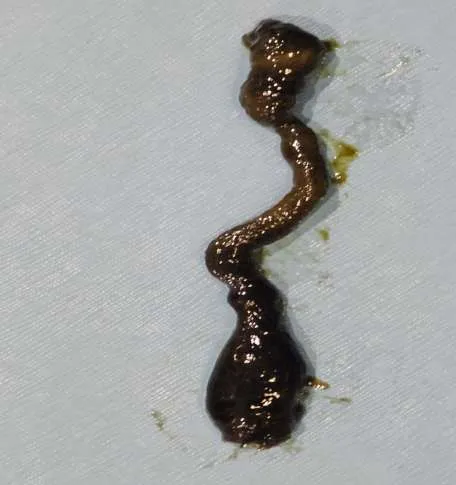
If not diagnosed antenatally, patients with simple meconium ileus can be differentiated from other babies with neonatal intestinal obstruction by some unique features. The former obstruction typically manifests soon after birth, as these babies have visible distended bowel loops with a ‘doughy’ consistency on palpation. Pressing with a finger may even indent these loops, the putty sign. Per rectal may characteristically lead to expulsion of meconium on withdrawal of finger. Approximately one-half of these patients present with simple uncomplicated obstruction, while the remaining present with complications of MI, including meconium peritonitis, atresia or “giant meconium cyst”, with palpable lump, discoloration of abdominal wall, and signs of peritoneal irritation.9
Radiographic Features
Antenatal records may depict echogenic bowel in the last trimester. Also, there may occur dilated bowel loops, abdominal cystic masses, speckled peritoneal calcifications with non-visualisation of the gall bladder. Echogenic bowel may occur in conditions like Downs syndrome, intrauterine growth retardation, prematurity, intestinal atresia, in utero cytomegalovirus(CMV) infection, abruptio placenta, and fetal demise.10
An abdominal radiograph depicts dilated loops without visible air-fluid levels, as the thick meconium present prevents fluid from layering out, disparity in different bowel segments. Differentials for such a plain radiograph include ileal atresia, meconium plug syndrome or Hirschsprung disease. A “soap bubble” or “ground-glass” appearance seen frequently in right half of the abdomen due to intermix of air bubbles with meconium. Radiographic findings in complicated MI may vary with the complication.
A contrast enema may be both diagnostic and therapeutic, as it may facilitate dislodgement of thick meconium and relieve obstruction. It shows microcolon or colon loaded with pellets, if contrast refluxes into ileum, it again outlines pellets of inspissated meconium. The enema also identifies Caecal position, indicating whether malrotation is present. In complicated cases, such as atresia, a microcolon with reflux into a decompressed terminal ileum may be noted.
Classically, the enema was done with hyperosmotic gastrograffin contrast to promote fluid exudation into the bowel lumen. However, due to concern for major fluid shifts, the radiologists now prefer iso-osmotic water-soluble contrast, which may have actually resulted in lower therapeutic success rates.11
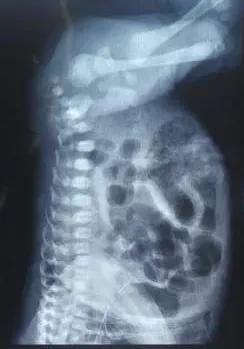
Soap bubble appearance
Figure 1. Radiograph showing “soap bubble” appearance
Diagnostic tests
The definitive study to confirm the diagnosis of CF is the sweat chloride test. Minimum amount of sweat should be 75-100mg to be collected from infant’s forearm, leg, or back; and the sodium concentration is measured, and concentration of ≥ 60mEq/L is diagnostic of CF. This test holds relevance only until the neonate is at least 2 kg and reaches 2-4 weeks of age. Neonatal CF screening programs using the Guthrie blood spot test for raised concentrations of immunoreactive trypsinogen is available in many countries, but must be confirmed in a two-stage approach incorporating CFTR (chromosome 7q31)mutation analysis If a family has known CFTR mutation then amniocentesis with fetal DNA restriction fragment length polymorphism analysis may predict a fetal CF diagnosis.
The pathophysiologic alteration of increased albumin concentration in meconium has diagnostic utility.12,13
Nonoperative Management
Initial management includes volume resuscitation and respiratory support if required. Gastric decompression to prevent progressive abdominal distention, aspiration and pulmonary deterioration. Empiric antibiotic to be initiated with correction of biochemical abnormalities if any.
Management in majority is non-operative with water-soluble isotonic contrast enema under fluoroscopic control which is both diagnostic and therapeutic. Prerequisite being one has ruled out other causes of obstructions and complications like volvulus, atresia and perforation. Adequate intravenous hydration is a must prior to performing contrast enema as it may cause transient osmotic diarrhoea and a putative osmotic diuresis. Under fluoroscopic guidance, slow contrast infusion per rectally without catheter balloon dilatation minimises risk of perforation. Usually, the neonate start evacuating meconium pellets followed by semiliquid meconium over ensuing 24-48 hours. After successful enema, 5ml of 10% N-acetyl cysteine should be administered every 6 hourly via nasogastric tube to liquify gastrointestinal secretion.
Furthermore, pancreatic enzymes must be supplemented once formula feeds are begun.14 Advantage is reduced pulmonary morbidity and length of stay, while disadvantage includes delay in operative intervention for whom medical management fails, and risk of perforation.
Operative Management
Failure of non-operative treatment mandates surgical intervention, this accounts for half of surgical patients. While another half have complications as described above. The aim of surgery is to relieve obstruction either by evacuation of adherent meconium or by resection of portion of bowel filled with inspissated material.
Simple meconium ileus
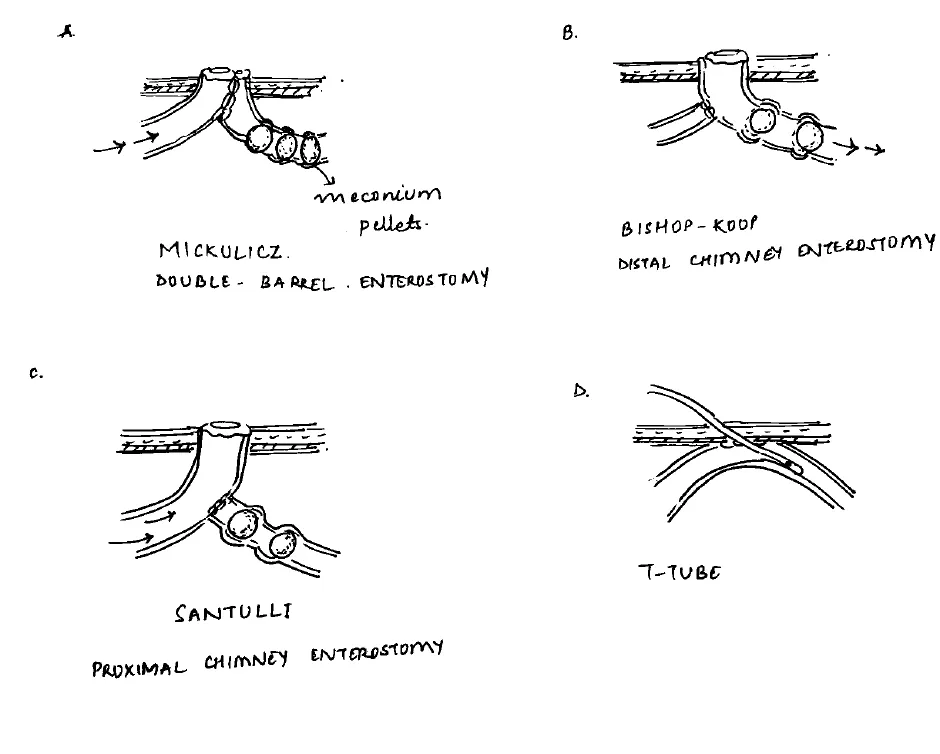
When conservative management fails to decompress adequately, for example, enema not promoting passage of meconium within 24-48 hours, or a complication from the contrast enema, there are various surgical options available for these patients, the most common being enterotomy with irrigation coupled with limited resection. Irrigation solutions may include warm saline, 50% diatrizoate solution, a 2% or a 4% solution of N-acetylcysteine. After irrigating the bowel of viscid meconium or its pellets, enterotomy can be closed or an enterostomy can be fashioned. Leaving a T-tube across this allows for controlled fistula, as well as allows for a conduit to instil pancreatic enzymes.15 This tube can be removed by postoperative day 14 and avoids need for reoperation. Alternative technique is appendectomy with appendicostomy.16 With a Mickulicz double-barrelled enterostomy, Gross initially advocated placement of a spur crushing Mickulicz clamp to complete a side to side anastomosis, the residual enterocutaneous fistula may close spontaneously. An alternative to this was primary resection and anastomosis recommended a decade later by Swenson and Noblett. Another alternative technique is the so called Bishop Koop procedure, where resection with distal chimney enterostomy is performed. The purpose was to limit intraoperative bowel trauma, resect disparately enlarged ileal loop filled with inspissated thickened meconium, create wide end of proximal to side of distal ileum anastomosis close to abdominal wall exiting the distal ileum, to serve as a functionally decompressing proximal stoma and permit bedside stoma closure.
Santulli described a proximal chimney enterostomy, reverse Bishop-Koop. Which needs early stoma closure due to high output17
Complicated meconium ileus
All cases mandate surgery, except ones where in utero perforation has left a telltale remnant of extraluminal intraperitoneal calcified meconium, a spontaneously sealed perforation, and no interruption of intestinal continuity.
In a meconium pseudocyst, a calcified fibrous wall forms around an accumulation of meconium, and spared bowel loops are peripheral to this cyst. Dense and vascular adhesions make operative field dissection difficult. Surgical management includes debridement of necrotic material, pseudocyst resection, diverting stoma(s), antibiotics, and meticulous postoperative care. Creation of an ostomy is usually the fastest and safest operative course, alleviating concern over bowel size discrepancy, anastomotic leak/obstruction, and return of bowel activity. However, neonates and infants with CF are at risk for total body sodium depletion from a combinations of their stoma output and sweating, and sodium chloride and possibly sodium bicarbonate repletion may be indicated in certain patients.18
Residual bowel length assessment intraoperatively is essential. Only diffuse bacterial peritonitis should preclude a primary anastomosis.
Post operative Management
Postoperative management of meconium ileus focuses on clearing residual blockages using acetylcysteine (Mucomyst) and transitioning to enteral nutrition with elemental formulas once gut patency is confirmed. Because of poor peristalsis and inherent malabsorption, patients require immediate pancreatic enzyme replacement and careful monitoring of salt, minerals, and Vitamin K levels. Patients with complicated MI or significant loss of intestinal length require enteral feeding with a predigested, diluted formula at low continuous volumes, if tolerated the con the concentration should be increased followed by volume. Pancreatic enzymes can be started at 2000-4000 lipase units per 120mL of full strength formula. It should be given even with MCT-oil-containing formulas.19 For cases involving prolonged ileus or short-bowel syndrome, total parenteral nutrition is utilized alongside short-term antibiotics to prevent pulmonary complications. If a Bishop-Koop or Mikulicz ileostomy was performed, specific bedside closure may be necessary before discharge Long-term care includes vigorous pulmonary physiotherapy and comprehensive parental training on postural drainage and stoma management. Priority should be given to securing a definitive Cystic Fibrosis diagnosis through sweat electrolyte testing to distinguish it from other causes of neonatal small bowel obstruction.
Complications
Gastrointestinal
In children and adolescents with CF, 15-37% suffer from Distal Intestinal Obstruction Syndrome (DIOS), a recurrent partial or complete intestinal obstruction secondary to abnormally viscid muco-feculent material in the distal ileum and right colon. Etiology is unclear, these patients present with history of steatorrhea from pancreatic exocrine insufficiency despite adequate enzyme therapy, it is typically managed non-operatively with acetylcysteine and gastrograffin. To prevent recurrence, clinicians focus on optimized hydration, stool softeners, and precise pancreatic enzyme therapy, occasionally using H2 blockers or proton pump inhibitors to stabilize intestinal pH.20 80% of patients younger than 5 years with cystic fibrosis have gastroesophageal reflux(GER). It may aggravate failure to thrive and adversely affect pulmonary function, so early diagnosis and treatment are of prime importance.21 Biliary complications, including gallstones and jaundice, affect approximately one-fourth of this population due to inspissated secretions that further impair fat absorption. Malnutrition is often severe, exacerbated by short-bowel syndrome and the high metabolic demands of chronic pulmonary infections, sometimes necessitating total parenteral nutrition. Intussusception occurs in about 1% of cases and often requires surgical intervention, while rectal prolapse in toddlers—frequently a presenting sign of CF—is usually resolved through enzyme replacement rather than rectopexy. Appendiceal obstruction can also occur, mimicking appendicitis and requiring CT imaging for a definitive diagnosis. Finally, high-dose enzyme therapy has been linked to colonic strictures, which may necessitate surgical resection if they cause intractable pain or obstruction.
Pulmonary
Early morbidity may include bacterial sepsis and bronchopneumonia. While some suggest the prognosis aligns with general CF patients after six months, other studies indicate that these children suffer from worse lung function and more obstructive disease between ages 8 and 12. To combat this, the aggressive use of aminoglycosides and semisynthetic penicillin is recommended when pathogens like Pseudomonas are identified. Furthermore, survival and long-term outcomes are significantly improved through the early implementation of prophylactic antibiotics and vigorous pulmonary physical therapy, including postural drainage, to minimize respiratory complications.22
Inguinoscrotal Disease
More incidence of hernia and hydrocele, as well as cryptorchidism. Presence of calcified hernia sac or absent vas deferens may suggest an underlying CF.
Outcomes
Treatment outcomes for meconium ileus have dramatically improved over the last three decades, with recent survival rates approaching 100% for both simple and complicated cases. Since the 1980s, the 5-year survival rate has reached 100%, a significant leap from the 30% survival rate seen in the 1960s. Data shows no significant difference in long-term outcomes based on gender, the presence of complications, or the specific type of surgery, such as the Bishop-Koop procedure. While early mortality was often surgical, deaths after six months are now primarily due to cardiopulmonary issues related to underlying Cystic Fibrosis. Occasional fatalities still occur from risks like intraperitoneal sepsis, pulmonary infections, or liver failure secondary to short-bowel syndrome.23
Meconium Plug Syndrome
It was first described I n 1956 by Clatworthy et al.24 Under normal conditions, the terminal two centimetres of neonatal meconium is firm in texture, forming a whitish cap. One in 500 newborns will have a longer, more tenacious obstructive plug. Failure to pass this plug results in MPS. Although presentation is similar to MI, the plug is often dislodged with per rectal stimulation. Etiology can be use of magnesium for tocolysis, congenital hypothyroidism, maternal narcotic addiction and neuronal intestinal dysplasia.
A contrast enema may be therapeutic as well as diagnostic with 97% success. Following resolution, a sweat test should be performed to exclude CF and a TSH to be performed.25
Recent Advances
Although there has been evidence that modifier genes play a role in the development of MI, multiple studies have failed to replicate the same results. One potential intervention to consider is treatment of mothers with CFTR correctors and potentiators to act on abnormal CFTR in the fetus. Theoretically, if started early enough, it is possible that these medications could alter the natural progression of MI. Another potential prenatal intervention would be in utero surgical decompression of SBO or correction of MI to prevent development of microcolon or other complications.22.
CFTR modulators help the defective CFTR protein function correctly. Recent developments include Next-Generation Triple Therapy (Alyftrek) , 2024 FDA approved Alyftrek (vanzacaftor/tezacaftor/deutivacaftor) for patients aged 6 and older. This once-daily regimen is more convenient than previous twice-daily options like Trikafta and has shown superior reduction in sweat chloride levels . Expanded eligibility for children: Trikafta (elexacaftor/tezacaftor/ivacaftor) is approved for children as young as 2 years old, allowing for earlier intervention to prevent irreversible lung damage.26
SUMMARY
- Meconium ileus accounts for 9-33% of neonatal intestinal obstructions due to intraluminal accumulation of inspissated meconium.
- It is the earliest clinical manifestation of Cystic Fibrosis (CF), presenting in up to 20% of CF patients.
- CF is an autosomal recessive condition, with subsequent meconium ileus incidence in index cases varying from 30% to 40%.
- The ΔF508 mutation is the most common CFTR gene location, found in nearly 75% of CF patients in some form.
- The affected protein, a cyclic adenosine monophosphate-induced chloride channel, regulates ion flow across epithelial cells, leading to desiccation of secretions across multiple systems (respiratory, GI, pancreatic, etc.).
- Gland dysfunction clinically correlates with pancreatic insufficiency (90%), meconium ileus (10-20%), diabetes mellitus (20%), and other conditions.
- Meconium ileus can be simple (viscid meconium obstructs terminal ileum, causing upstream dilation and a microcolon) or complex (associated with prenatal volvulus, atresia, or perforation).
- A positive family history is present in 10-33% of patients, and polyhydramnios may occur in 20% of cases due to high-grade obstruction.
- Operative intervention is only necessary if nonoperative treatments, like contrast enemas, fail, or if the meconium ileus is complicated by issues such as volvulus, perforation, atresia, or gangrene.
- The primary goals of surgery are to relieve the obstruction, remove the meconium, and restore intestinal continuity while preserving as much bowel length as possible to avoid short-bowel syndrome. Surgical options include simple enterotomy with irrigation, bowel resection (if necessary) with either primary anastomosis (sewing ends together) or the creation of a temporary ileostomy (like the Bishop-Koop or Mikulicz procedure), which is later closed in a second operation
- Faecal elastase should be utilized to confirm the presence of pancreatic insufficiency once the gastrointestinal tract is in continuity and pasty stool is present. Watery stool from an enterostomy or rectally delivered can result in a falsely low faecal elastase.
- With an enterostomy, total body sodium deficit may contribute to poor weight gain and overall growth. It is imperative to correct this to achieve an optimal nutritional status.
- Even with MI, overall prognosis with respect to lung function is identical to other CF patients. However, the risk for developing DIOS is much higher.
REFERENCES
- Rivosecchi M. Meconial Ileus. In: Puri P, Höllwart M editors. Pediatric Surgery Diagnosis and Management. Berlin: Springer-Verlang; 2009. p. 415-422.
- Escobar M.A., Grosfeld J.L., Burdick J.J., Powell R.L., Jay C.L., Wait A.D., et al.: Surgical considerations in cystic fibrosis: a 32-year evaluation of outcomes . J Surg 2005; 138 (4): pp. 560-572
- Allan JL, Robbie M, Phelan PD, Danks DM. Familial occurrence of meconium ileus. Eur J Pediatr. 1981 Feb;135(3):291-2.
- Bell S.C., Mall M.A., Gutierrez H., Macek M., Madge S., Davies J.C., Burgel P.R., Tullis E., Castanos C., Castellani C., et al. The future of cystic fibrosis care: A global perspective. Lancet Respir. Med. 2020;8:65–124.
- Saint-Criq V, Gray MA. Role of CFTR in epithelial physiology. Cell Mol Life Sci. 2017 Jan;74(1):93-115.
- Layla Diab Cáceres, Ester Zamarrón de Lucas. Cystic fibrosis: Epidemiology, clinical manifestations, diagnosis and treatment. Medicina Clínica, Volume 161, Issue 9,2023; 389-396.
- Irish MS, Ragi JM, Karamanoukian H, et al. Prenatal diagnosis of the fetus with cystic fibrosis and meconium ileus. Pediatr Surg Int.1997;12:434–436.
- Carlyle BE, Borowitz DS, Glick PL. Meconium ileus. In: Ziegler MM, Azizkhan RG, von Allman D,TRW, eds. Operative Pediatric Surgery.2nd ed. San Francisco:
- McGraw-Hill; 2014:558–570.
- Leonidas JC, Berdon WE, Baker DH, et al. Meconium ileus and its complications. A reappraisal of plain film roentgen diagnostic criteria. Am J Roentgenol Radium Ther Nucl Med. 1970;108:598–609
- Benacerraf BR, Chaudhury AK. Echogenic fetal bowel in the third trimester associated with meconium ileus secondary to cystic fibrosis. A case report. J Reprod Med. 1989;34:299–300
- Manzoor A, Talat N, Adnan HM, Zia MW, Aziz MA, Ahmed E. Contrast Enema: Solving Diagnostic Dilemmas in Neonates With Lower Intestinal Obstruction. Cureus. 2022 Mar 24;14(3):e23458.
- Sosnay PR, White TB, Farrell PM, et al. Diagnosis of cystic fibrosis in nonscreened populations. J Pediatr. 2017;181S:S52–S57.
- Gibson LE, Cooke RE. A test for concentration of electrolytes in sweat in cystic fibrosis of the pancreas utilizing pilocarpine by iontophoresis. Pediatrics.
- 1959;23:545–549.
- Rescorla FJ, Grosfeld JL. Contemporary management of meconium ileus. World J Surg. 1993;17:318–325.
- Steiner Z, Mogilner J, Siplovich L, et al. T-tubes in the management of meconium ileus. Pediatr Surg Int. 1997;12:140–141.
- Fitzgerald R, Conlon K. Use of the appendix stump in the treatment of meconium ileus. J Pediatr Surg. 1989;24:899–900
- O'Neill JA, Grosfeld JL, Boles T, Clatworthy HW. Surgical treatment of meconium ileus. The American J of Surg. 1970; 119:99-105
- Bower TR, Pringle KC, Soper RT. Sodium deficit causing decreased weight gain and metabolic acidosis in infants with ileostomy. J Pediatr Surg. 1988;23:567–572.
- Durie PR, Newth CJ, Forstner GG, Gall DG. Malabsorption of medium-chain triglycerides in infants with cystic fibrosis: correction with pancreatic enzyme supplement. J Pediatr. 1980 May;96(5):862-4. doi:10.1016/s0022-3476(80)80559-2. PMID: 7365588.
- Colombo C, Ellemunter H, Houwen R, et al. Guidelines for the diagnosis and management of distal intestinal obstruction syndrome in cystic fibrosis patients. J Cyst Fibros. 2011;10(suppl 2):S24–S28.
- Dziekiewicz MA, Banaszkiewicz A, Urzykowska A, et al. Gastro-esophageal reflux disease in children with cystic fibrosis. Adv Exp Med Biol. 2015;873:1–7
- Sathe M, Houwen R. Meconium ileus in Cystic Fibrosis. J of Cystic Fibrosis.
- 2017;16(2):S32-S39.
- Efrati O, Nir J, Fraser D, et al. Meconium ileus in patients with cystic fibrosis is not a risk factor for clinical deterioration and survival: the Israeli multicenter study. JPGN. 2010;50:173–178
- Clatworthy H, Howard W, Lloyd J. The meconium plug syndrome. Surgery.
- 1956;39:131–142.136. Cuenca AG, Ali As, Kays DW, et al. “Pulling the plug” – management of meconium plug syndrome in neonates. J Surg Res. 2012;175:e43–e46.
- Parisi GF, Terlizzi V, Manti S, Papale M, Pecora G, Presti S, Tosto M, Leonardi S. Cutting-Edge Advances in Cystic Fibrosis: From Gene Therapy to Personalized Medicine and Holistic Management. Genes (Basel). 2025 Mar 30;16(4):402